
Lemon Basil Pesto Pasta – Fresh, Bright & Easy

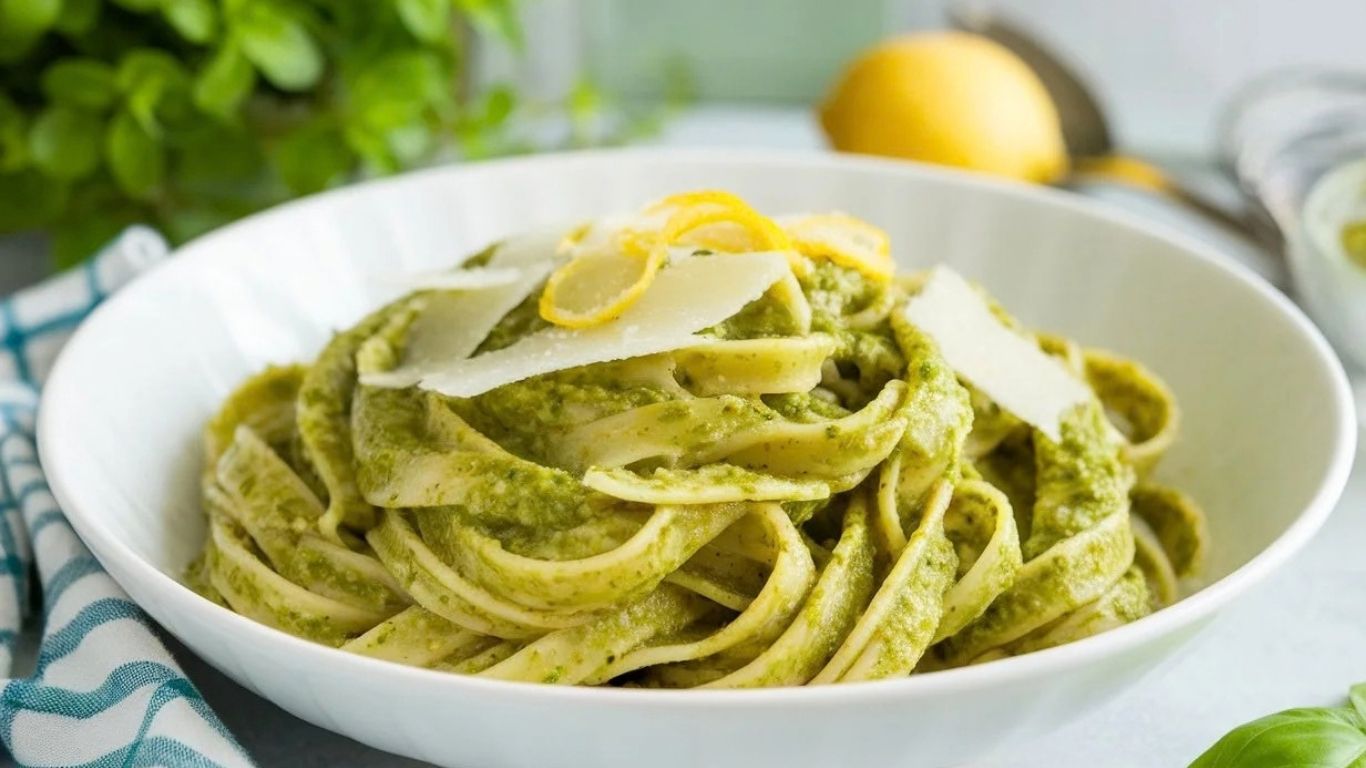
There are nights when I want pasta, but I don’t want a heavy sauce sitting in my stomach afterward. That’s when I reach for lemon basil pesto pasta. It has the comforting feel of a simple bowl of pasta, but the fresh basil, garlic, lemon, and Parmesan give it a much brighter flavor.
Lemon Basil Pesto Pasta – Fresh, Bright & Easy
Ingredients
- 2 cups fresh basil leaves
- 1/3 cup pine nuts
- 2 cloves garlic
- 1/2 cup freshly grated Parmesan cheese
- 1/2 cup extra-virgin olive oil
- Zest and juice of 1 lemon
- Salt, to taste
- Black pepper, to taste
- 8 ounces pasta
- Reserved pasta water, as needed
- Extra Parmesan, for serving
- Extra lemon zest, for finishing if desired
Instructions
- Bring a large pot of well-salted water to a boil. Cook the pasta according to the package directions until al dente. Before draining, reserve about 1 cup of the pasta cooking water.
- While the pasta cooks, add basil, pine nuts, garlic, Parmesan, lemon zest, lemon juice, salt, and black pepper to a food processor. Pulse until finely chopped.
- With the food processor running, slowly add the olive oil until the mixture becomes a loose, spoonable pesto. Avoid over-processing.
- Drain the pasta and return it to the warm pot or place it in a large serving bowl. Add the pesto and toss until the pasta is evenly coated.
- Add reserved pasta water a tablespoon or two at a time, tossing continuously, until the pesto becomes smooth and lightly coats the pasta.
- Taste and adjust the lemon juice, salt, or black pepper if needed. Finish with extra Parmesan and lemon zest, then serve warm.
I especially like this recipe when I have a bunch of fresh basil to use up. The pesto comes together quickly, and once the pasta is cooked, dinner is practically done. A little reserved pasta water helps everything cling to the noodles, giving the finished dish a smooth, glossy texture without making it overly rich.
A Few Tips Before You Start
- Use fresh basil: Bright green, fresh leaves give the pesto its best flavor and aroma.
- Save some pasta water: The starchy water helps loosen the pesto and coat the pasta evenly.
- Cook the pasta just until al dente: It should still have a little bite rather than becoming soft and mushy.
- Add the lemon gradually: Start with the recommended amount, then adjust after mixing the pesto with the pasta.
- Don’t over-blend the pesto: Short pulses help keep the basil fresh-tasting instead of turning it into a dull, overly smooth paste.
Why This Lemon Basil Pesto Pasta Comes Together So Well
The appeal of this lemon basil pesto pasta is the balance between rich and fresh flavors. Basil and olive oil provide the familiar pesto base, while Parmesan adds saltiness and depth. Garlic gives it a savory edge, and lemon cuts through the richness with just enough acidity.
The cooking method also keeps things simple. While the pasta boils, the pesto can be prepared in a food processor or blender. Once the pasta is drained, the warm noodles help loosen the pesto, and a splash of reserved cooking water creates a silky coating.
It’s a useful recipe to keep in mind when you want something homemade without spending a long time at the stove.
What Gives This Pasta Its Fresh Character?
The lemon is what makes this version stand out to me. Traditional pesto can be quite rich, especially when there is plenty of olive oil and Parmesan involved. Lemon juice and zest bring a clean, bright note that makes every bite feel lighter.
I also like that the pesto is flexible. You can keep the dish simple with just pasta and Parmesan, or add cooked shrimp, chicken, tomatoes, or vegetables when you want a more substantial meal.
My Favorite Trick for Silky Pesto Pasta
My biggest tip is to reserve the pasta water before draining. I usually scoop some out once the pasta is nearly finished cooking and keep it nearby.
When you toss the hot pasta with pesto, add the water a tablespoon or two at a time. The starch helps the pesto spread across the noodles instead of sitting in thick clumps. I find it much easier to control the consistency this way than adding extra olive oil.
Everything You Need
For the lemon basil pesto
- 2 cups fresh basil leaves, preferably bright green and tender
- 1/3 cup pine nuts
- 2 cloves garlic
- 1/2 cup freshly grated Parmesan cheese
- 1/2 cup extra-virgin olive oil
- Zest and juice of 1 lemon
- Salt, to taste
- Black pepper, to taste
For the pasta
- 8 ounces pasta, such as linguine, penne, fusilli, or spaghetti
- Reserved pasta water, as needed
- Extra Parmesan, for serving
- Extra lemon zest, for finishing if desired
How to Make Lemon Basil Pesto Pasta
1. Get the pasta cooking
Bring a large pot of well-salted water to a boil. Add the pasta and cook according to the package directions until al dente.
Before draining, reserve about 1 cup of the pasta cooking water. You may not need all of it, but having extra gives you more control over the finished sauce.
2. Prepare the pesto
While the pasta cooks, add the basil, pine nuts, garlic, Parmesan, lemon zest, lemon juice, salt, and black pepper to a food processor.
Pulse several times until the ingredients are finely chopped.
With the processor running, slowly add the olive oil until the mixture forms a loose, spoonable pesto. Stop once everything is combined; there is no need to process it for a long time.
Taste and adjust the salt, pepper, or lemon if needed.
3. Combine the pasta and pesto
Drain the cooked pasta and immediately return it to the warm pot or place it in a large serving bowl.
Add the pesto and toss thoroughly so the sauce begins coating the pasta. Add a small splash of reserved pasta water and continue tossing.
Keep adding pasta water a little at a time until the pesto looks smooth and lightly coats the noodles rather than gathering at the bottom of the bowl.
4. Finish and serve
Taste the pasta once more. If you want more brightness, add a little extra lemon juice or zest.
Finish with freshly grated Parmesan and, if you like, a little black pepper. Serve while warm, or allow it to cool slightly for a room-temperature pasta dish.
Easy Ingredient Swaps That Actually Work
- Pine nuts: Walnuts are an excellent alternative and give the pesto a slightly earthier flavor. Almonds or sunflower seeds can also work.
- Parmesan: Pecorino Romano can be used for a sharper, saltier flavor. If using Pecorino, start with less added salt.
- Linguine or spaghetti: Penne, fusilli, farfalle, and other short pasta shapes work well. Shapes with ridges or curves are particularly good at holding pesto.
- Fresh basil: For this particular pesto, fresh basil is preferable. Dried basil won’t provide the same fresh flavor or texture.
- Pine nuts for a nut-free version: Sunflower seeds are a practical replacement if you need to avoid tree nuts.
- Olive oil: Use a good-quality extra-virgin olive oil with a flavor you enjoy, since it forms a significant part of the pesto.
Storing and Reheating Leftovers
This pasta is best when freshly tossed, but leftovers can be refrigerated in an airtight container for about 3 days.
The pesto may thicken as it sits, so add a small splash of water when reheating. Warm the pasta gently in a skillet over low to medium heat, tossing frequently until heated through. Avoid cooking it for too long, since excessive heat can make the pasta soft and cause the pesto to lose some of its fresh character.
If you want to prepare pesto ahead, it can also be frozen separately in small portions. Thaw it in the refrigerator before using and stir well.
What Can Go Wrong?
- Cooking the pasta too long: Overcooked pasta becomes soft and won’t hold the pesto as nicely. Check it toward the lower end of the package cooking time.
- Forgetting the pasta water: Without it, the pesto can remain thick and unevenly distributed. Reserve some before draining.
- Adding all the pasta water at once: Too much liquid can make the sauce watery. Add it gradually until you reach the consistency you want.
- Over-processing the basil: Running the food processor for too long isn’t necessary. Short pulses followed by a slow addition of oil are enough.
- Using old or wilted basil: Basil that has lost its freshness can produce a weaker or harsher pesto. Choose leaves that look vibrant and fragrant.
- Making the pesto too salty: Parmesan already contributes plenty of salt, so season gradually and taste before adding more.
- Skipping the lemon zest: The juice provides acidity, but the zest adds a concentrated lemon aroma that helps give this pasta its distinctive flavor.
Questions You May Have About This Recipe
Can I make lemon basil pesto ahead of time?
Yes. The pesto can be prepared a day ahead and kept covered in the refrigerator. Give it a good stir before tossing it with freshly cooked pasta.
Can I use jarred pesto?
You can, but the flavor will be different. If you’re using store-bought pesto, adding a little fresh lemon zest and juice can give it some of the brightness that makes this recipe distinctive.
Can I serve this pasta cold?
Yes. It works well as a room-temperature or chilled pasta dish. If it seems dry after refrigeration, toss it with a small amount of water and a little extra olive oil before serving.
What protein goes well with lemon basil pesto pasta?
Cooked shrimp and grilled chicken are both natural pairings. You can also add sliced grilled vegetables or white beans if you want something different.
Can I make this without a food processor?
Absolutely. A blender works, although you may need to stop and scrape the sides occasionally. For a more traditional approach, you can also make the pesto with a mortar and pestle.
A Fresh Pasta Dish Worth Keeping in Rotation
Lemon basil pesto pasta is one of those recipes I like having in my back pocket because it delivers plenty of flavor without requiring a complicated cooking process. Fresh basil and garlic give it the familiar pesto character, while lemon keeps the whole dish bright and balanced.
For the best texture, focus on two small details: cook the pasta until al dente and use reserved pasta water to loosen the pesto. Those simple steps make a noticeable difference, especially when you’re serving the pasta right away.