
Creamy Garlic Parmesan Pasta – A Simple One-Pot Comfort Dinner

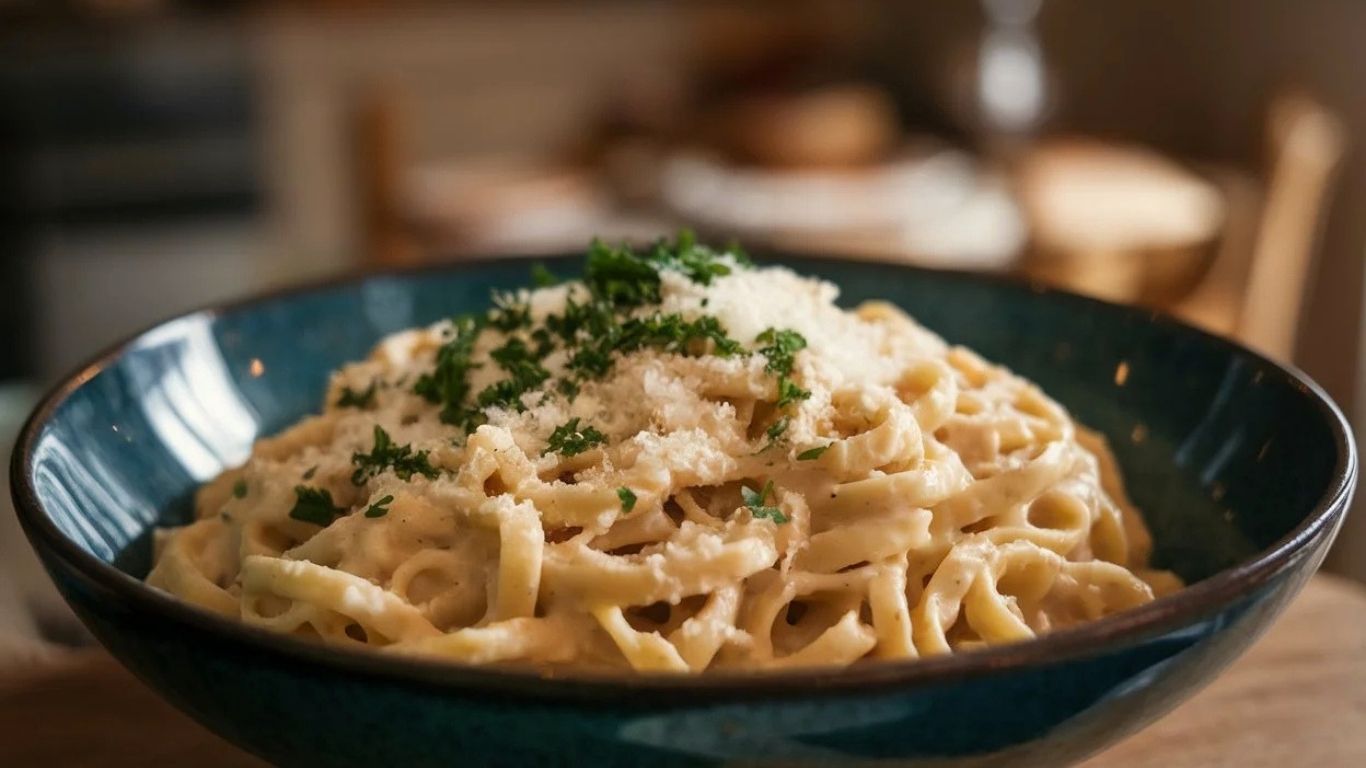
There are evenings when I want something creamy and comforting but don’t want to spend half the night cooking or cleaning. This Creamy Garlic Parmesan Pasta is one of those recipes I come back to when I need dinner to be easy without feeling like an afterthought. Everything cooks in one pot, and the pasta absorbs the savory broth and garlic as it simmers, which gives the finished sauce plenty of flavor.
Creamy Garlic Parmesan Pasta
Ingredients
- 8 oz pasta, such as fettuccine, linguine, or penne
- 2 tbsp butter
- 4 cloves garlic, minced
- 2 ½ cups chicken broth
- 1 cup milk
- 1 cup freshly grated Parmesan cheese
- Salt, to taste
- Black pepper, to taste
- Chopped fresh parsley, optional, for garnish
Instructions
- Melt the butter in a large skillet or saucepan over medium heat. Add the minced garlic and cook for 1–2 minutes, stirring often, until fragrant. Do not let the garlic brown.
- Add the dry pasta, chicken broth, and milk. Stir well and bring the mixture to a gentle boil.
- Reduce the heat to a gentle simmer. Cook for 10–12 minutes, stirring every couple of minutes so the pasta cooks evenly and does not stick. Continue until the pasta is tender and most of the liquid has reduced.
- Remove the pan from the heat. Add the freshly grated Parmesan and stir until melted into a smooth, creamy sauce.
- Season with salt and black pepper to taste. Let the pasta sit for 1–2 minutes so the sauce can thicken slightly.
- Garnish with chopped fresh parsley, if desired, and serve warm.
Save For Later
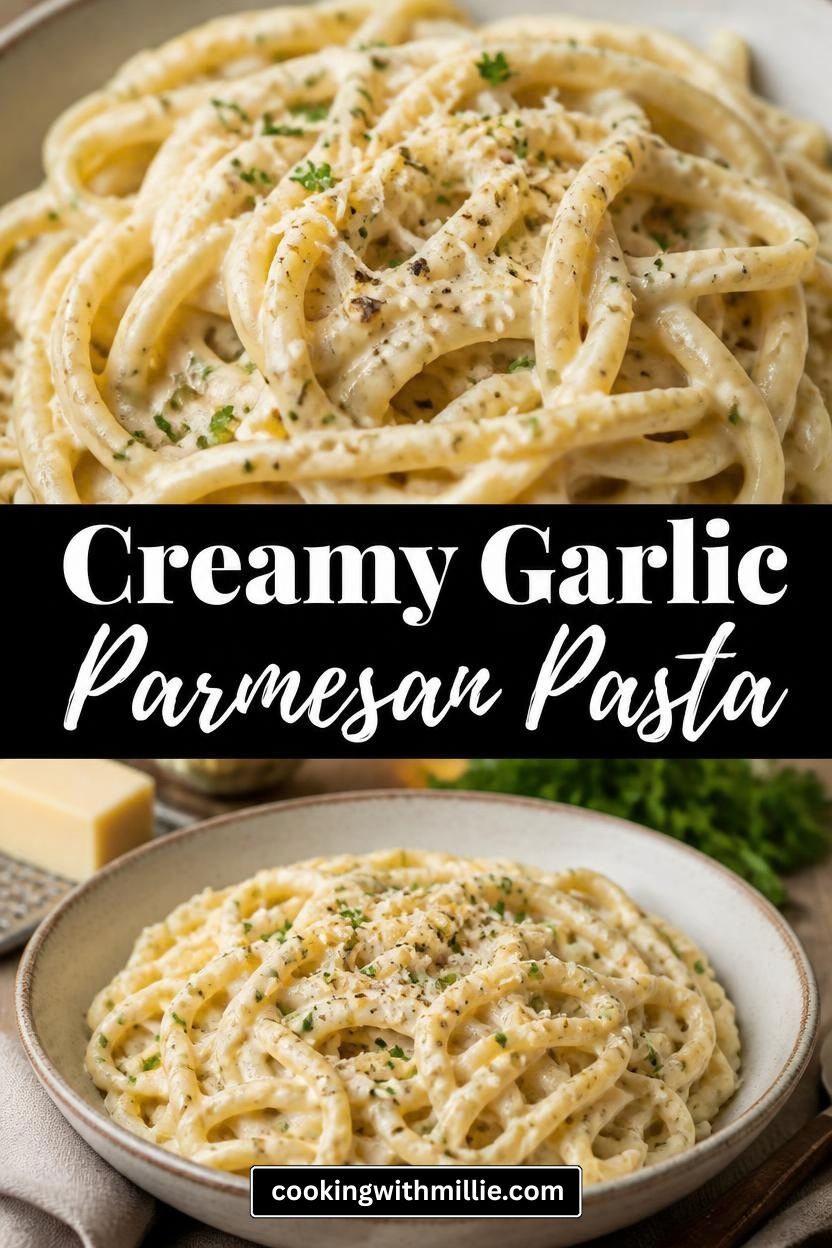
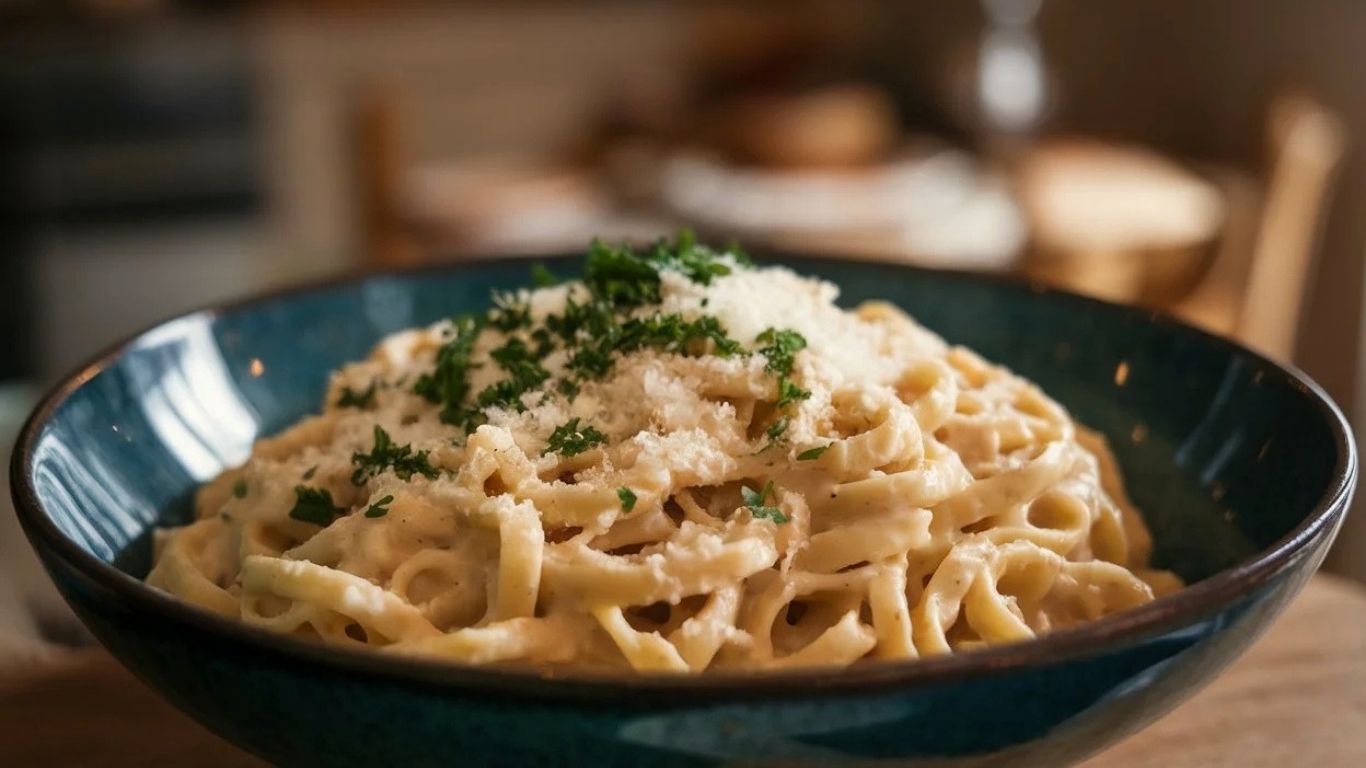
I like the way the Parmesan melts into the warm pasta at the end, creating a smooth, cheesy sauce without needing a separate saucepan. A little fresh parsley brightens everything up, while black pepper adds just enough contrast. It’s simple food, but when the pasta is served hot and creamy, it feels much more satisfying than the short ingredient list suggests.
A Few Tips Before You Start
- Use a large, wide pot so the pasta has enough room to cook evenly.
- Keep the liquid at a gentle simmer, rather than a rapid boil, to help the sauce stay smooth.
- Stir the pasta every couple of minutes so it doesn’t stick to the bottom.
- Use freshly grated Parmesan for the smoothest melt.
- Add the Parmesan off the heat so it blends into the sauce without becoming grainy.
The Simple Balance Behind the Sauce
The beauty of this creamy garlic Parmesan pasta comes from the way the pasta cooks directly in the broth and milk. As the pasta releases some of its starch, the cooking liquid gradually becomes thicker, giving the sauce more body without requiring a separate roux.
Garlic provides the main savory note, while butter gives the base a richer flavor. Milk keeps the sauce creamy without making it overly heavy, and Parmesan brings saltiness and a deeper cheesy taste.
The one-pot method also saves time. Instead of boiling pasta separately and preparing a sauce in another pan, the pasta and sauce develop together.
What Gives This Pasta Its Character
This isn’t a complicated pasta recipe, and that’s exactly what I enjoy about it. The ingredient list is made up of familiar kitchen staples, but the cooking method brings them together in a way that makes the finished dish feel cozy and complete.
The Parmesan is especially important because it finishes the sauce rather than simply sitting on top. Once stirred into the hot pasta off the heat, it melts into the remaining cooking liquid and gives the dish its creamy consistency.
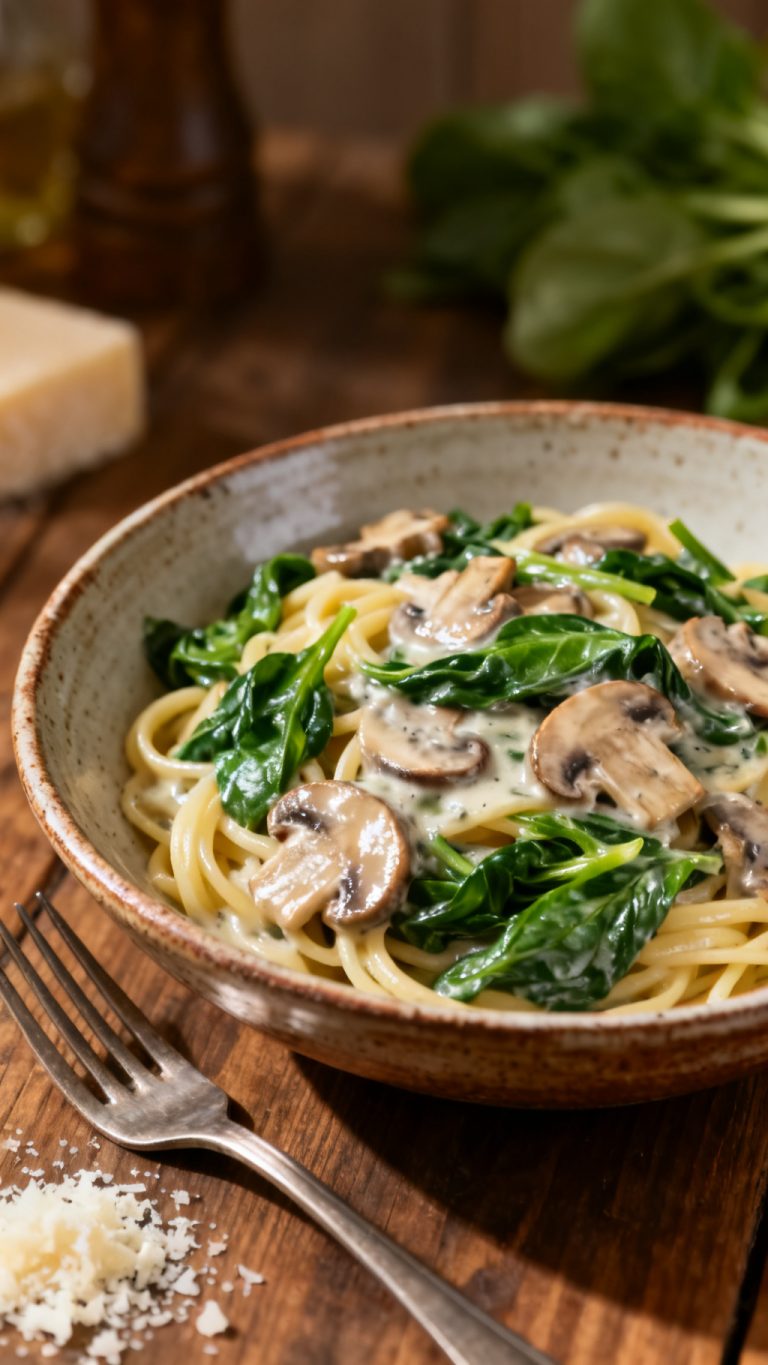
It’s also an easy base for additions. If you have leftover cooked chicken, sautéed mushrooms, spinach, or shrimp, they can be added without changing the basic method.
My Trick for a Smooth Parmesan Sauce
I always take the pot off the heat before adding the Parmesan. This small step makes a noticeable difference.
Very high heat can cause cheese to seize or turn grainy, especially when it’s being mixed into a hot liquid. Letting the pasta cool slightly for a moment, then stirring in freshly grated Parmesan gradually, gives it a better chance to melt smoothly into the sauce.
I also reserve a little patience for the final stirring. The sauce may look slightly loose at first, but it thickens as the pasta sits for a minute or two.
What Goes Into This Dish
- 8 ounces pasta — fettuccine, linguine, penne, or another medium-sized pasta shape
- 2 tablespoons butter
- 4 cloves garlic, minced
- 2 ½ cups chicken broth — use vegetable broth for a meatless version
- 1 cup milk — whole milk gives the sauce a richer texture
- 1 cup freshly grated Parmesan cheese
- Salt, to taste
- Black pepper, to taste
- Chopped fresh parsley, optional, for serving
How to Make Creamy Garlic Parmesan Pasta
1. Start with the garlic
Melt the butter in a large pot over medium heat. Add the minced garlic and cook for about 1–2 minutes, stirring frequently.
The garlic should become fragrant without taking on a dark brown color. If it starts browning quickly, lower the heat.
2. Add the pasta and liquids
Pour in the chicken broth and milk, then add the dry pasta. Stir everything together and bring the liquid to a gentle boil.
Make sure the pasta is mostly covered by the liquid. If you’re using a long pasta such as linguine or fettuccine, give it a moment to soften so it can settle into the pot.
3. Let everything simmer together
Reduce the heat to maintain a gentle simmer. Cook for about 10–12 minutes, stirring every couple of minutes to keep the pasta from sticking.
The exact cooking time will depend on the pasta shape you use. Watch the texture toward the end and continue cooking until the pasta is tender and the liquid has reduced into a creamy sauce.
4. Finish with Parmesan
Remove the pot from the heat. Add the freshly grated Parmesan and stir until it melts into the pasta and the sauce looks smooth.
Taste and adjust the salt and black pepper as needed.
5. Let the sauce settle
Give the pasta a minute or two to rest before serving. The sauce will continue to thicken slightly as it sits.
Finish with chopped fresh parsley if you like, then serve while warm.
Simple Ingredient Swaps
- Chicken broth: Vegetable broth works well if you want to keep the pasta meatless. The flavor will be slightly lighter.
- Milk: Whole milk gives the richest result, but 2% milk can also work. The sauce may be a little less creamy.
- Parmesan: Pecorino Romano can be used for a sharper, saltier flavor. If using it, taste before adding extra salt.
- Pasta shape: Penne and rigatoni hold plenty of sauce, while linguine and fettuccine give you a more traditional creamy pasta feel.
- Butter: You can use olive oil instead, although the finished sauce will have a slightly different flavor.
Storing and Reheating Leftovers
Creamy garlic Parmesan pasta is best when served fresh, but leftovers can be refrigerated in an airtight container for up to 3 days.
The sauce will become noticeably thicker as it chills. When reheating, add a small splash of milk or broth and warm the pasta gently over low to medium-low heat, stirring occasionally.
Avoid overheating it, as high heat can make the Parmesan sauce separate or become oily. I find that reheating smaller portions works better than trying to warm a large batch all at once.
Freezing isn’t my first choice for this pasta because the milk-and-Parmesan sauce can change texture after thawing. For the best creamy consistency, make it fresh or refrigerate leftovers for a short period.
Things That Can Affect the Final Result
- Browning the garlic: Garlic can turn bitter if it gets too dark. Cook it just until fragrant before adding the liquids.
- Boiling too aggressively: A rapid boil can reduce the liquid too quickly and make it harder for the pasta to cook evenly. Keep the heat moderate.
- Not stirring the pasta: Since everything cooks in one pot, the pasta can stick to the bottom if left untouched for too long.
- Adding Parmesan over high heat: This can lead to a grainy or separated sauce. Remove the pot from the heat first.
- Using too much salt too early: Parmesan and broth both contribute salt, so taste the finished pasta before adding more.
- Cooking past the pasta’s ideal texture: Check it near the end of the cooking time. Overcooked pasta can make the finished dish feel soft rather than creamy and satisfying.
Questions You May Have
Can I make Creamy Garlic Parmesan Pasta ahead of time?
You can prepare it ahead, but it is best shortly after cooking. The pasta absorbs more of the sauce as it sits, so leftovers will need a splash of milk or broth when reheated.
What pasta shape works best?
Almost any medium-sized pasta works. Penne and rigatoni are particularly good at holding the creamy sauce, while linguine and fettuccine give the dish a classic creamy pasta appearance.
Can I use vegetable broth instead of chicken broth?
Yes. Vegetable broth is an easy substitute and works particularly well if you’re serving the pasta without meat.
Why did my Parmesan sauce become grainy?
The most common reason is adding the cheese while the liquid is extremely hot or keeping the pot over high heat while stirring it in. Remove the pasta from the heat and use freshly grated Parmesan for a smoother result.
Can I add chicken or vegetables?
Absolutely. Cooked chicken, sautéed mushrooms, spinach, or shrimp can all work well. Add cooked ingredients toward the end so they warm through without becoming overcooked.
A One-Pot Pasta I’ll Happily Make Again
This Creamy Garlic Parmesan Pasta is the kind of dinner I appreciate when I want something comforting without creating a pile of dishes. The pasta cooks right in the flavorful broth and milk, then gets finished with butter, garlic, and freshly grated Parmesan for a creamy, savory sauce.
Keep the simmer gentle, stir the pasta regularly, and add the Parmesan off the heat. Those small details make the difference between an ordinary bowl of pasta and one that’s genuinely creamy and satisfying.