
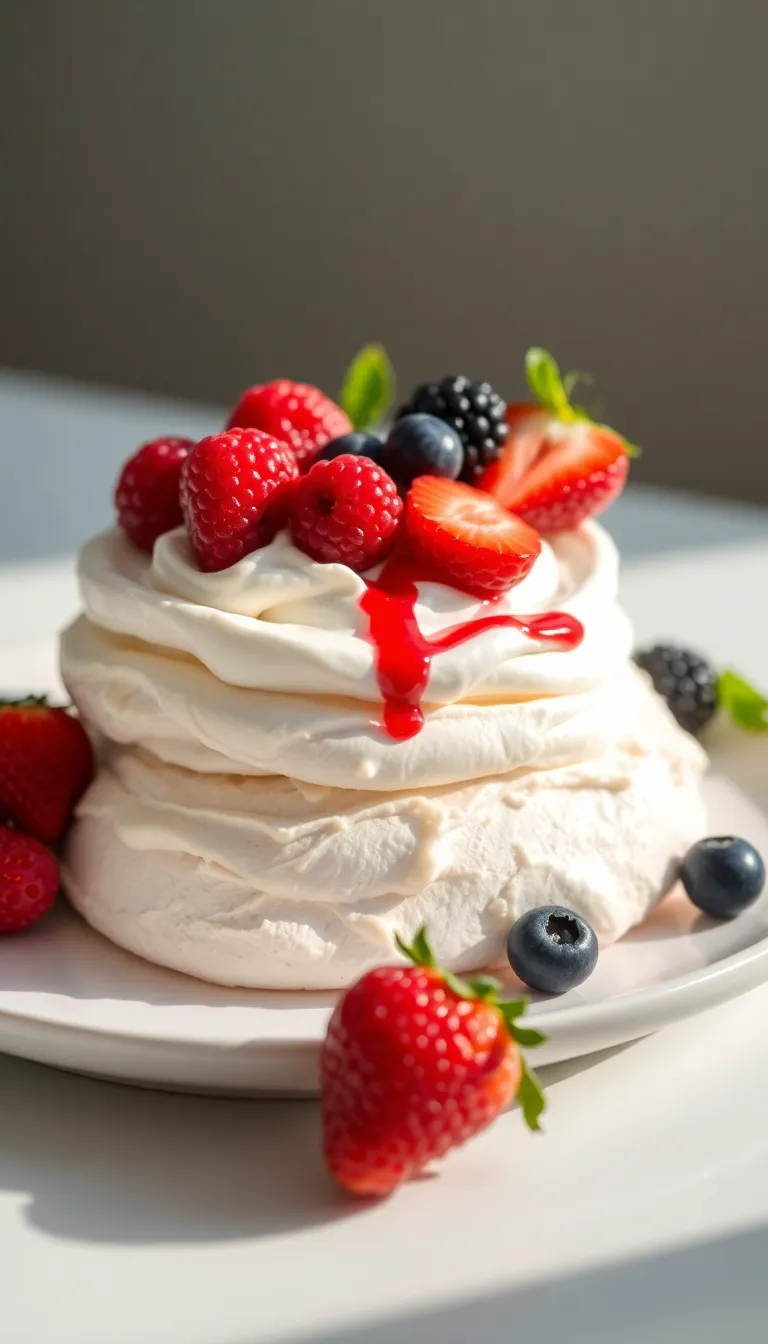
Pavlova with Fresh Berries – The Perfect Balance of Crunchy and Creamy

I remember the first time I bit into a pavlova topped with fresh berries—the contrast between its crisp shell and marshmallow-soft center was unlike any dessert I’d tried before. That unique crunch combined with creamy sweetness is what inspired me to perfect my own pavlova recipe.
Pavlova with Fresh Berries – The Perfect Balance of Crunchy and Creamy
Ingredients
- 4 large egg whites at room temperature
- 1 cup superfine sugar
- 1 teaspoon white vinegar
- 2 teaspoons cornflour (cornstarch)
- 1 cup heavy cream, chilled
- 2 tablespoons powdered sugar
- 1 teaspoon vanilla extract
- 1 cup strawberries, hulled and halved
- 1 cup blueberries
- 1 cup raspberries
Instructions
- Preheat your oven to 250°F (120°C) and line a baking sheet with parchment paper; I find drawing a 7-inch circle as a guide helps keep shape consistent
- Carefully separate the egg whites, ensuring no yolk or shell gets in, then let them reach room temperature for about 30 minutes before starting
- Using an electric mixer, start whipping the egg whites on medium speed until soft peaks form, then gradually add superfine sugar one tablespoon at a time while increasing speed to high until the mixture turns glossy and holds stiff peaks
Key Takeaways
- Whip egg whites until stiff peaks form but remain glossy
- Use cornflour and vinegar to achieve the soft interior
- Cool pavlova slowly in a turned-off oven to avoid cracks
- Top with fresh mixed berries and whipped cream for best balance
Why This Recipe Works
I always recommend using room-temperature egg whites and gradually adding superfine sugar while whipping to build stable peaks. This technique creates that perfect crisp outer shell while preserving the soft marshmallow texture inside.
Pro Tip: Whip egg whites slowly adding sugar one tablespoon at a time
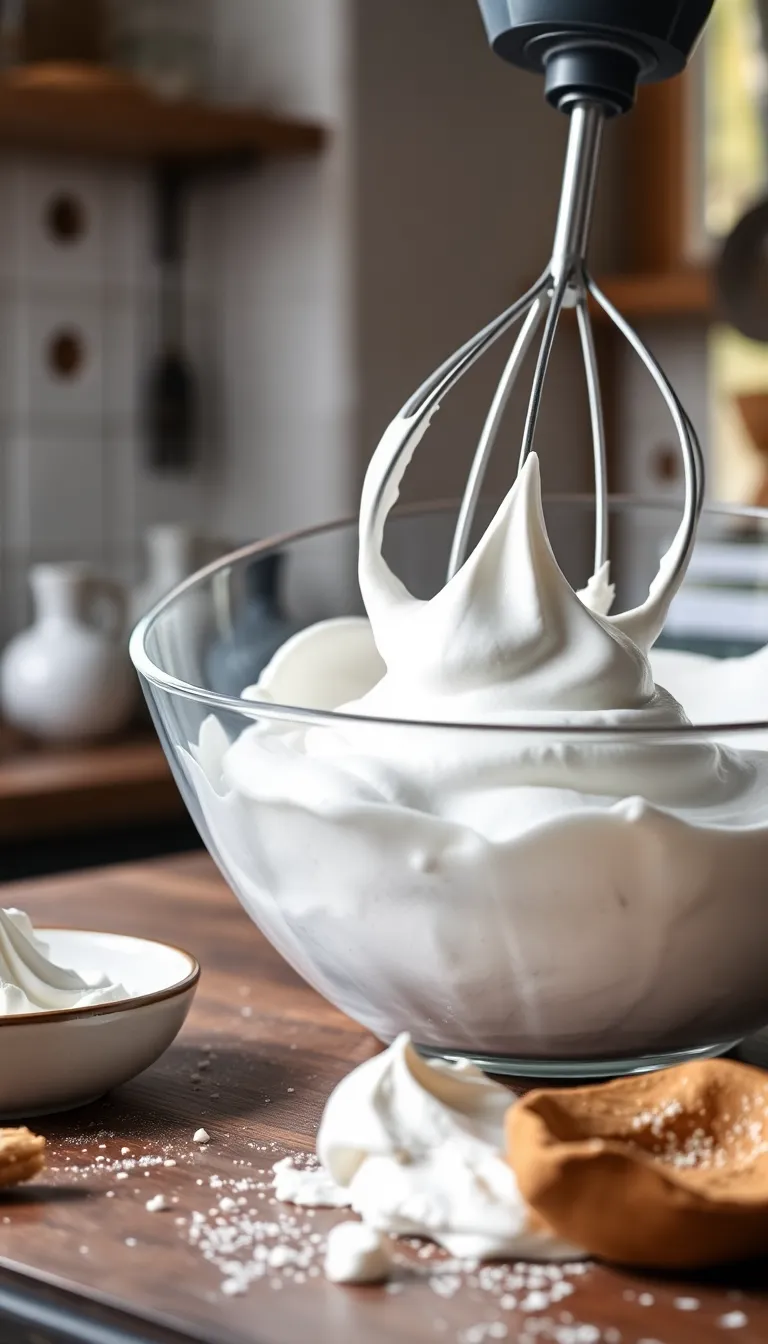
The Science Behind Pavlova’s Texture
I find that the addition of cornflour and white vinegar is critical in balancing the structure of the pavlova. Cornflour helps create a tender interior by absorbing moisture, while vinegar strengthens the egg white proteins—resulting in that iconic crisp yet creamy texture.
Fact: Cornflour and vinegar create pavlova’s signature soft inside
My Favorite Way to Top Pavlova
I love using a mixture of fresh strawberries, blueberries, raspberries, and a dollop of lightly sweetened whipped cream. This not only adds vibrant color but also contrasts the pavlova’s crunch with bright acidity and creamy richness.
Insight: I always top with mixed berries for fresh, tangy balance
Ingredients
- 4 large egg whites at room temperature
- 1 cup superfine sugar
- 1 teaspoon white vinegar
- 2 teaspoons cornflour (cornstarch)
- 1 cup heavy cream, chilled
- 2 tablespoons powdered sugar
- 1 teaspoon vanilla extract
- 1 cup strawberries, hulled and halved
- 1 cup blueberries
- 1 cup raspberries
Instructions
- Preheat your oven to 250°F (120°C) and line a baking sheet with parchment paper; I find drawing a 7-inch circle as a guide helps keep shape consistent
- Carefully separate the egg whites, ensuring no yolk or shell gets in, then let them reach room temperature for about 30 minutes before starting
- Using an electric mixer, start whipping the egg whites on medium speed until soft peaks form, then gradually add superfine sugar one tablespoon at a time while increasing speed to high until the mixture turns glossy and holds stiff peaks
- Gently fold in the sifted cornflour and vinegar with a spatula—this is key to keeping the pavlova’s interior tender while maintaining structure
- Spoon the meringue onto the parchment inside the drawn circle, spreading slightly with a spatula to form a shallow well in the center for the toppings
- Bake in the preheated oven for 1 hour; when done, turn off the oven and leave the pavlova inside to cool completely for at least 2 hours or overnight to prevent cracking from sudden temperature changes
- Whip the heavy cream with powdered sugar and vanilla extract until soft peaks form, taking care not to overwhip which makes the cream grainy
- Carefully transfer the cooled pavlova to a serving plate, spread the whipped cream in the center, and top generously with the mixed berries just before serving
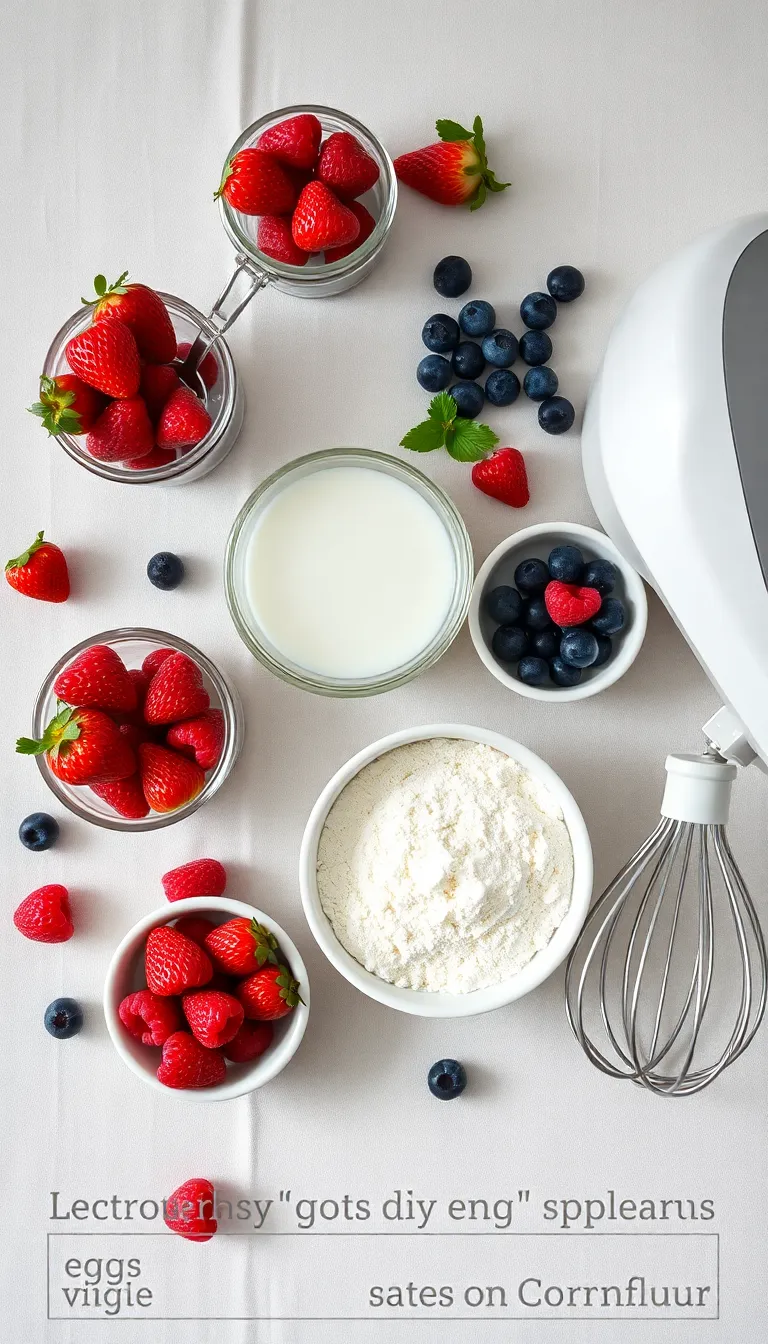
Ingredient Alternatives & Substitutions
- Replace superfine sugar with caster sugar if superfine is unavailable — I’ve found it dissolves just as well
- Use lemon juice instead of white vinegar for a slight citrus note — I’ve tested this and it adds nice brightness
- Swap heavy cream for coconut cream for a dairy-free topping — I’ve tried it and it complements the berries nicely
- Try raspberries and blackberries instead of strawberries and blueberries for a deeper berry flavor
- Use powdered erythritol for a lower sugar version but expect slightly less crisp texture
Storage Instructions
- Store the baked pavlova base in an airtight container at room temperature away from humidity for up to 2 days
- Assemble the pavlova just before serving to prevent the meringue from becoming soggy
- Keep leftover whipped cream covered in the fridge and use within 24 hours
- Freeze any leftover pavlova base in a freezer-safe bag for up to 1 month and thaw at room temperature before use
Common Mistakes to Avoid
- Adding sugar too quickly — I learned this the hard way as it results in grainy meringue
- Using cold egg whites — I always let mine come to room temperature to whip better
- Opening the oven door during baking can cause the pavlova to collapse, which I’ve experienced before
- Not cooling the pavlova inside a turned-off oven leads to cracks from sudden temperature change
- Overmixing the whipped cream until it turns grainy — patience is key for smooth peaks
Frequently Asked Questions
Q: Can I make the pavlova base ahead of time?
Ans: Yes, I always bake the base a day ahead and store it in an airtight container. I add the cream and berries just before serving to keep it crisp.
Q: Why does my pavlova crack?
Ans: In my experience, rapid temperature changes cause cracking. I recommend cooling it slowly in the turned-off oven to avoid this.
Q: Can I use regular sugar instead of superfine sugar?
Ans: You can, but I find superfine sugar dissolves better into the egg whites, giving a smoother meringue with fewer grains.
Conclusion
I encourage you to try this pavlova recipe because the texture contrast between the crunchy shell and soft inside is truly rewarding. With fresh berries and whipped cream, it becomes a stunning dessert that’s sure to impress and satisfy any sweet tooth.