
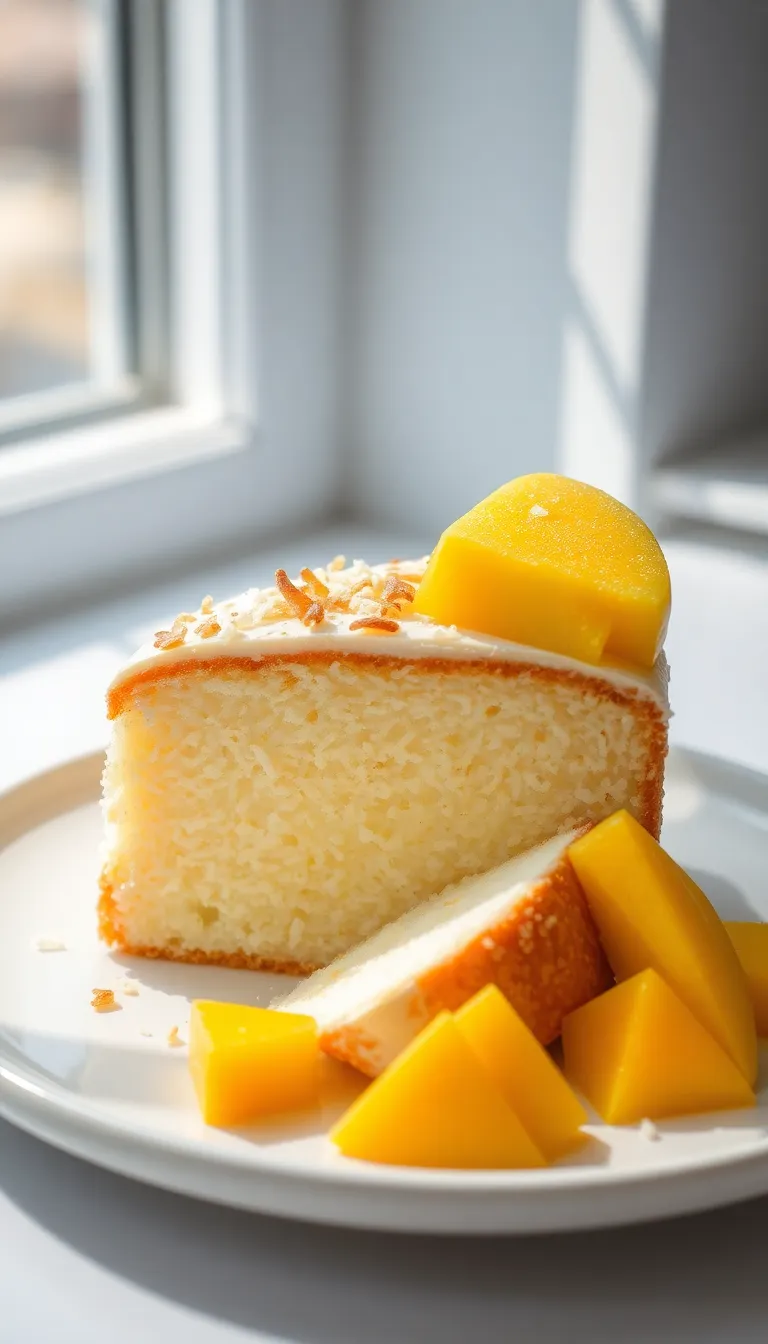
Mango Coconut Cake – Rich Coconut Flavor Meets Juicy Mango

I first experimented with this mango coconut cake after craving a tropical twist on classic sponge cake. The way the rich coconut flavor melds with juicy, fresh mango surprised me and made this cake an instant favorite in my kitchen.
Mango Coconut Cake – Rich Coconut Flavor Meets Juicy Mango
Ingredients
- 2 cups all-purpose flour
- 1 1/2 teaspoons baking powder
- 1/2 teaspoon baking soda
- 1/4 teaspoon salt
- 3/4 cup unsweetened shredded coconut
- 1 cup granulated sugar
- 1/2 cup unsalted butter, softened
- 2 large eggs
- 1 cup coconut milk (full fat)
- 1 teaspoon vanilla extract
- 1 1/2 cups fresh mango, diced
Instructions
- Preheat the oven to 350°F (175°C) and grease a 9-inch round cake pan; I found greasing and lining with parchment prevents sticking perfectly.
- Spread shredded coconut on a baking sheet and toast in the oven for 5-7 minutes until golden; I watch closely to avoid burning.
- In a medium bowl, sift together flour, baking powder, baking soda, and salt; I find sifting ensures even leavening distribution.
Key Takeaways
- Use fresh ripe mango for maximum juiciness
- Incorporate coconut milk for moist, tender crumb
- Toast shredded coconut to enhance flavor before adding
- Fold batter gently to keep cake light and fluffy
Why This Recipe Works
I always recommend balancing the tropical flavors carefully so neither the coconut nor mango overwhelms the other. Using coconut milk instead of water or regular milk really enriches the cake’s texture, while fresh mango chunks add pleasant bursts of moisture and sweetness.
Pro Tip: Toast shredded coconut lightly to deepen coconut aroma
The Role of Coconut Milk
In my experience, coconut milk is the secret ingredient that prevents the cake from drying out despite the light crumb. It brings natural fats and a distinct creaminess that water or dairy can’t replicate, making every bite satisfying yet delicate.
Fact: Coconut milk’s oil content boosts moisture retention in cakes
My Mango Selection Insight
I’ve found that the key to juicy cake is choosing mangoes that are perfectly ripe but still firm. Overripe mangoes tend to make the batter too wet, while underripe ones lack sweetness. I always rely on the slight fruity aroma and a gentle give to pick the right mangoes.
Insight: I trust aroma and firmness to gauge mango ripeness for this cake
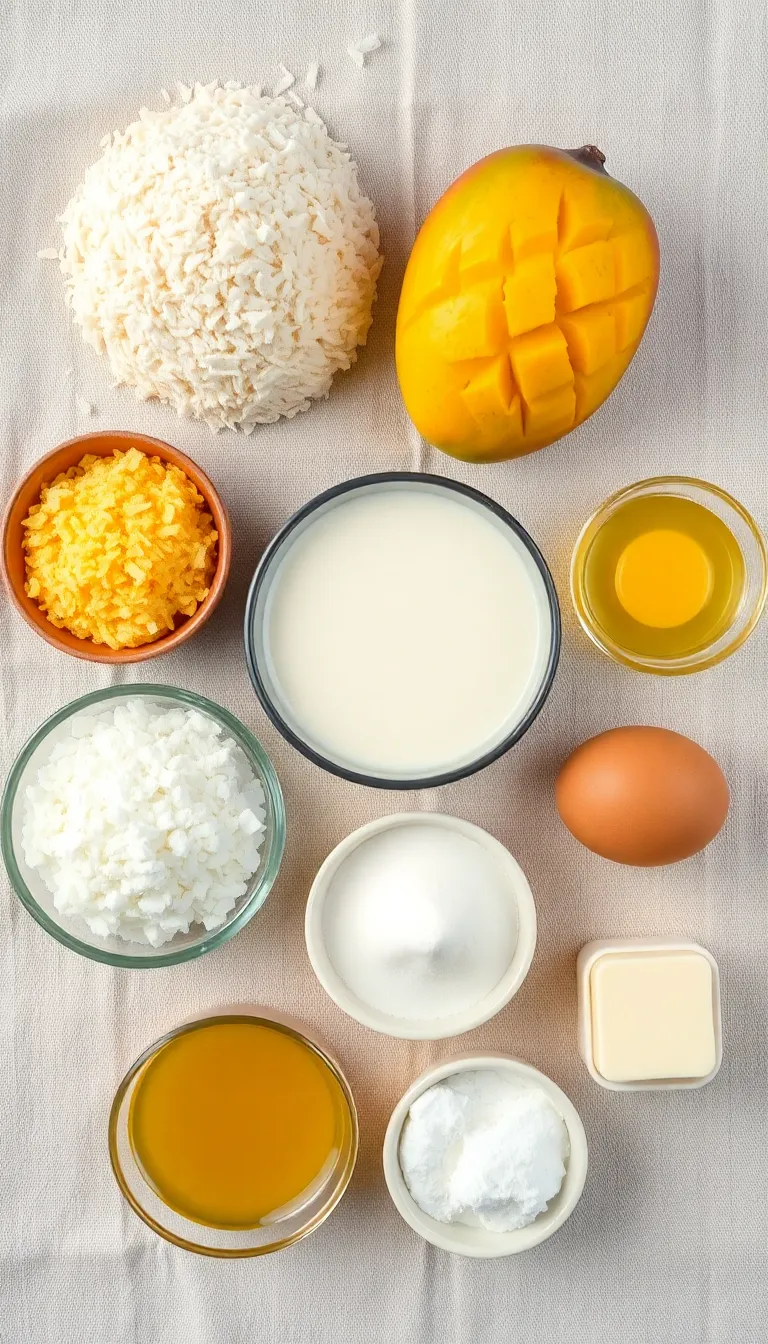
Ingredients
- 2 cups all-purpose flour
- 1 1/2 teaspoons baking powder
- 1/2 teaspoon baking soda
- 1/4 teaspoon salt
- 3/4 cup unsweetened shredded coconut
- 1 cup granulated sugar
- 1/2 cup unsalted butter, softened
- 2 large eggs
- 1 cup coconut milk (full fat)
- 1 teaspoon vanilla extract
- 1 1/2 cups fresh mango, diced
Instructions
- Preheat the oven to 350°F (175°C) and grease a 9-inch round cake pan; I found greasing and lining with parchment prevents sticking perfectly.
- Spread shredded coconut on a baking sheet and toast in the oven for 5-7 minutes until golden; I watch closely to avoid burning.
- In a medium bowl, sift together flour, baking powder, baking soda, and salt; I find sifting ensures even leavening distribution.
- In a large bowl, cream the softened butter with sugar until light and fluffy using an electric mixer at medium speed.
- Beat in the eggs one at a time, mixing well after each addition; this helps maintain the batter’s structure.
- Mix in the vanilla extract, then alternate adding the dry ingredients and coconut milk, starting and ending with dry ingredients; I fold gently to keep the batter airy.
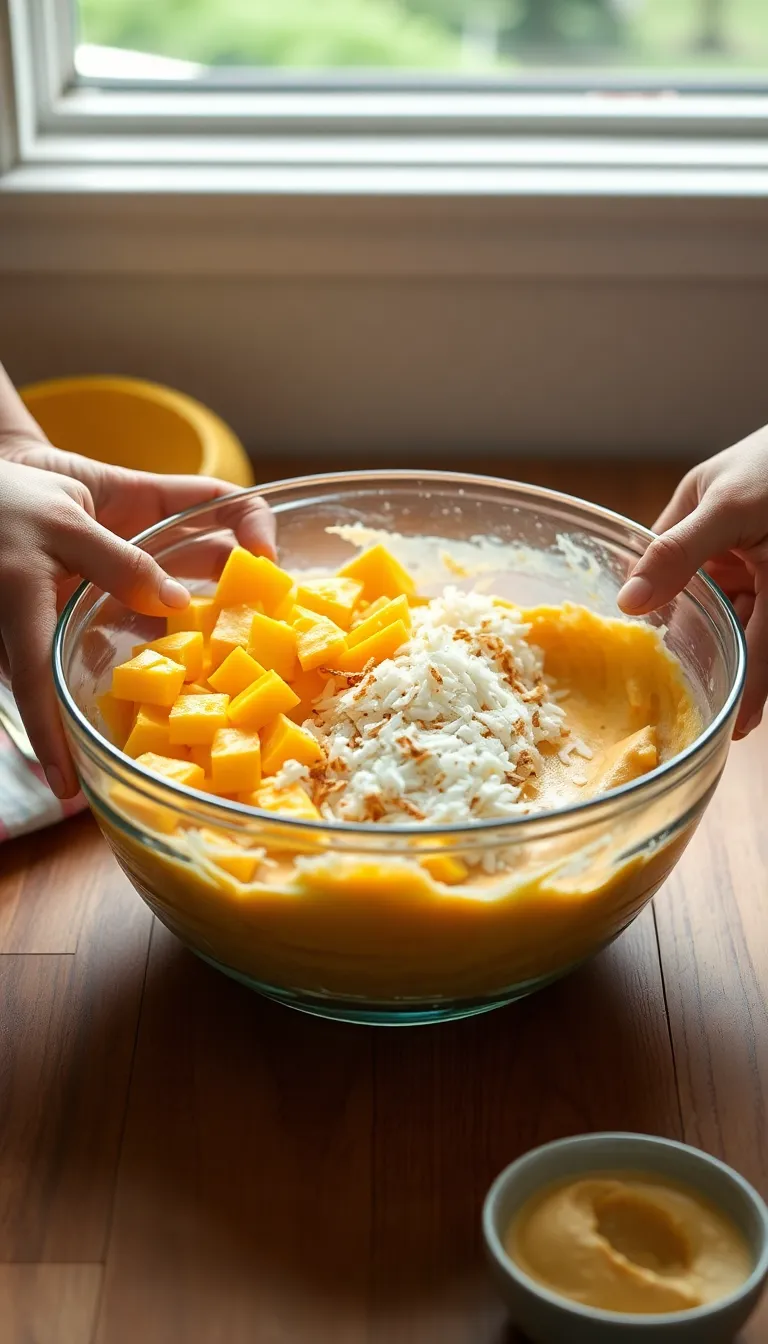
- Fold in the toasted shredded coconut and diced mango carefully to avoid breaking up the fruit too much.
- Pour the batter into the prepared pan and smooth the top with a spatula.
- Bake for 38-42 minutes until a toothpick inserted comes out clean; I usually start checking around 35 minutes to prevent overbaking.
- Cool the cake in the pan for 15 minutes, then transfer to a wire rack to cool completely before serving.
Ingredient Alternatives & Substitutions
- Replace butter with coconut oil for a dairy-free and extra coconut flavor — I’ve tested this and the texture stays moist
- Use canned mango pulp instead of fresh mango for convenience but reduce coconut milk slightly to balance moisture
- Substitute shredded sweetened coconut with unsweetened if you prefer a less sweet cake
- Swap granulated sugar with coconut sugar to complement the coconut notes — it adds a subtle caramel depth
- Use almond milk instead of coconut milk if you want a lighter dairy-free option, but coconut milk gives better richness
Storage Instructions
- Store the cake in an airtight container at room temperature for up to 2 days to keep it moist
- Refrigerate the cake if storing longer than 2 days, wrapped tightly with plastic wrap to prevent drying, for up to 5 days
- Freeze the cake wrapped in plastic and then foil in an airtight container for up to 2 months; thaw overnight in the refrigerator
- Allow frozen cake to come to room temperature before serving for best texture and flavor
Common Mistakes to Avoid
- Overmixing the batter causing a dense cake; I learned this the hard way by ending with a heavier texture
- Using underripe mango that lacks sweetness and moisture, leading to a bland cake
- Skipping toasting the shredded coconut, which reduces the depth of coconut flavor — I always toast it now
- Adding mango too early or mixing too vigorously, which breaks the fruit and colors the batter unevenly
- Not measuring coconut milk precisely, resulting in either a dry or overly wet crumb
Frequently Asked Questions
Q: Can I use frozen mango cubes instead of fresh mango?
Ans: I’ve used frozen mango cubes thawed and drained well; they work fine but be sure to remove excess liquid to avoid soggy batter.
Q: What frosting pairs best with this mango coconut cake?
Ans: In my experience, a light cream cheese frosting or whipped coconut cream balances the tropical flavors without overwhelming them.
Q: Can I make this cake gluten-free?
Ans: I haven’t tested it myself, but swapping all-purpose flour for a gluten-free blend with xanthan gum should work, though texture may vary.
Conclusion
I encourage you to try this mango coconut cake to experience how beautifully tropical flavors can harmonize in a simple yet impressive dessert. It’s a crowd-pleaser that balances richness and fruit freshness perfectly, and I’m confident you’ll love it as much as I do.