
Creamy Pesto Pasta With Burst Cherry Tomatoes
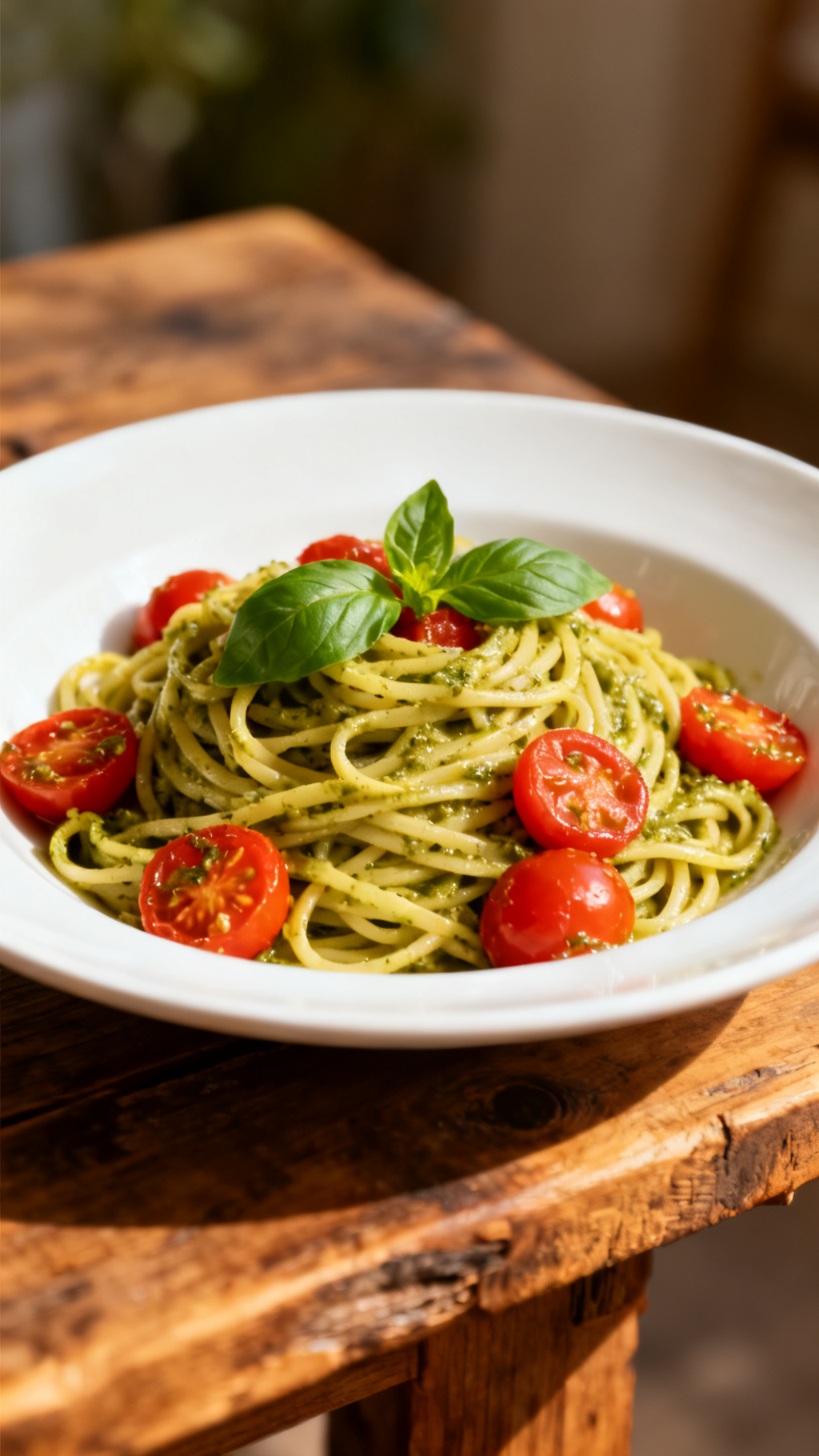
I’ve made creamy pesto pasta countless times, but adding burst cherry tomatoes gave it a fresh, vibrant twist I absolutely love. After years of experimenting with pasta sauces, this recipe strikes the perfect balance between richness and brightness.
Creamy Pesto Pasta With Burst Cherry Tomatoes

Ingredients
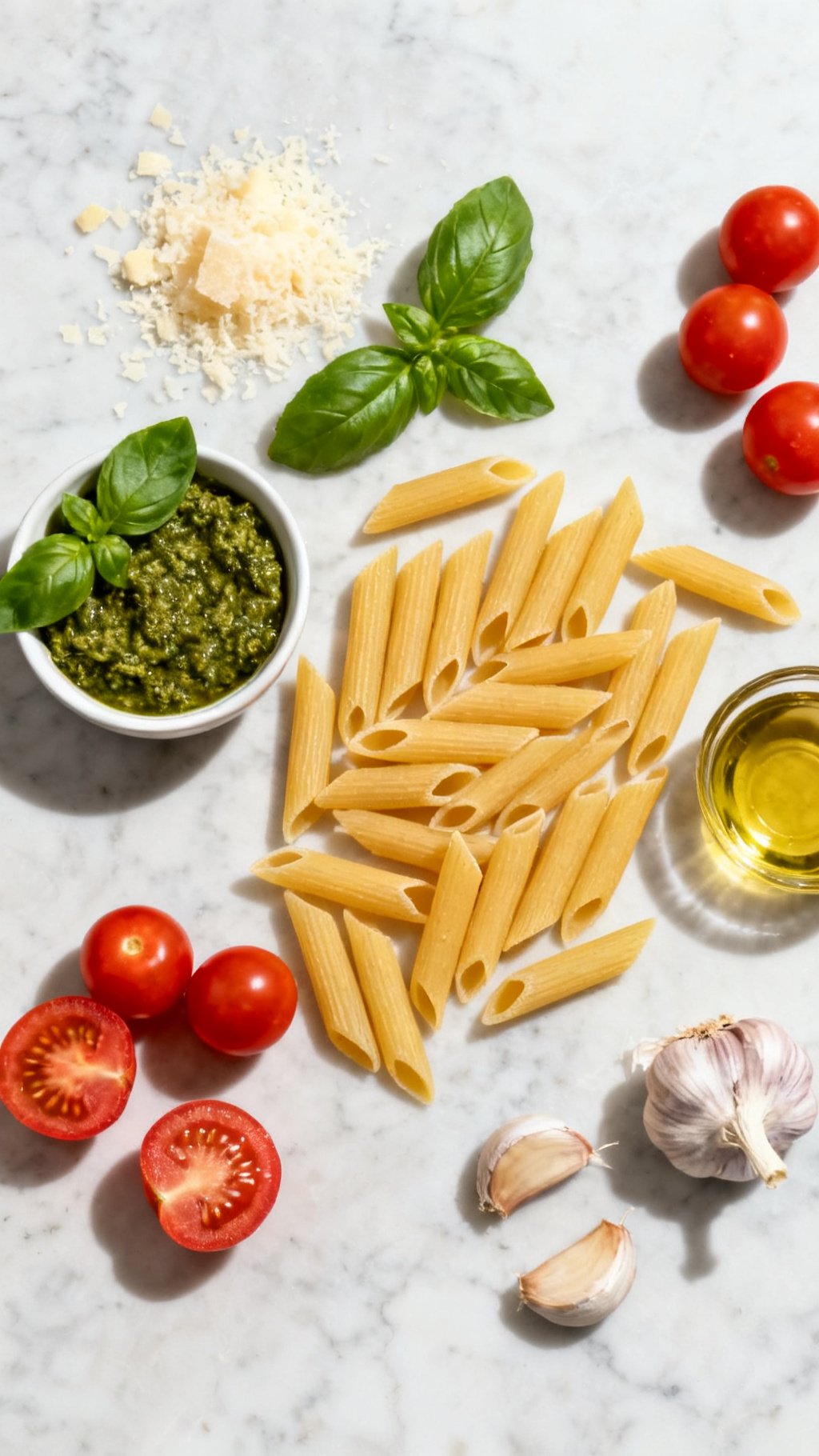
- 12 ounces penne pasta
- 1 cup fresh basil pesto
- 1 cup heavy cream
- 1 cup cherry tomatoes, halved
- ½ cup grated parmesan cheese
- 2 tablespoons olive oil
- 2 cloves garlic, minced
- Salt, to taste
- Freshly ground black pepper, to taste
- Fresh basil leaves, for garnish
Instructions
- Bring a large pot of salted water to a boil and cook the penne pasta until al dente, usually 9–10 minutes; I always taste early to avoid overcooking.
- While the pasta cooks, heat olive oil in a large skillet over medium heat, then add minced garlic and sauté until fragrant, about 1 minute.
- Add halved cherry tomatoes to the skillet and cook until they begin to burst, stirring occasionally, about 4–5 minutes; I gently press a few tomatoes to help release juices.
Key Takeaways
- Use fresh basil pesto for best flavor
- Burst cherry tomatoes to add natural sweetness
- Creamy sauce made with heavy cream and cheese
- Cook pasta al dente for perfect texture
Why Fresh Pesto Makes a Difference
I always recommend using fresh basil pesto when making creamy pesto pasta because the flavor is more vibrant and aromatic than store-bought. Fresh pesto elevates the whole dish and blends seamlessly into the cream sauce.
Pro Tip: Use fresh basil pesto to maximize flavor and aroma

The Science Behind Bursting Tomatoes
When I gently cook cherry tomatoes until they burst, their natural sugars caramelize slightly, adding a subtle sweetness and acidity that complements the creamy sauce perfectly. This technique also creates a lovely texture contrast in each bite.
Fact: Bursting tomatoes caramelizes sugars enhancing flavor naturally
My Approach to Creamy Pasta Perfection
I’ve found that combining heavy cream with parmesan cheese creates a sauce that clings beautifully to pasta without being overly heavy. I always stir gently and finish cooking the sauce with the pasta water to get a balanced consistency.
Insight: I balance cream and cheese for silky, clingy pasta sauce every time
Ingredients
- 12 ounces penne pasta
- 1 cup fresh basil pesto
- 1 cup heavy cream
- 1 cup cherry tomatoes, halved
- ½ cup grated parmesan cheese
- 2 tablespoons olive oil
- 2 cloves garlic, minced
- Salt, to taste
- Freshly ground black pepper, to taste
- Fresh basil leaves, for garnish
Instructions
- Bring a large pot of salted water to a boil and cook the penne pasta until al dente, usually 9–10 minutes; I always taste early to avoid overcooking.
- While the pasta cooks, heat olive oil in a large skillet over medium heat, then add minced garlic and sauté until fragrant, about 1 minute.
- Add halved cherry tomatoes to the skillet and cook until they begin to burst, stirring occasionally, about 4–5 minutes; I gently press a few tomatoes to help release juices.
- Lower the heat and stir in the heavy cream and fresh basil pesto, mixing until the sauce is smooth and heated through.
- Drain the pasta, reserving about ½ cup of pasta water. Add pasta to the skillet with the sauce and toss well, adding pasta water a little at a time to loosen the sauce as needed.
- Stir in grated parmesan cheese, then season with salt and freshly ground black pepper to taste.
- Serve immediately, garnished with extra basil leaves; I find that fresh herbs brighten the whole dish.
Ingredient Alternatives & Substitutions
- Replace heavy cream with coconut cream for dairy-free but keep pesto dairy-free accordingly — I’ve tested this and it works with a slightly different flavor
- Use gluten-free pasta for a gluten intolerance-friendly version, which I’ve found holds up well in this sauce
- Swap penne with fusilli or farfalle for a different bite texture — I enjoy how the sauce clings to these shapes
- Use sun-dried tomatoes instead of fresh cherry tomatoes for a more intense flavor, though it changes the freshness profile
- Substitute parmesan with pecorino romano for a saltier twist I’ve used successfully
Storage Instructions
- Store leftover creamy pesto pasta in an airtight container in the refrigerator for up to 3 days
- Reheat gently on the stove with a splash of cream or water to restore creaminess as I always recommend
- Freeze portions in freezer-safe bags for up to 2 months; thaw overnight in the fridge before reheating
- Avoid reheating in the microwave without adding liquid to prevent sauce separation, a mistake I’ve learned from
Common Mistakes to Avoid
- Overcooking the pasta: I once ruined a batch by letting it get mushy, so I always taste early
- Adding pesto directly to boiling pasta water, which dilutes flavor — I always mix pesto into sauce instead
- Not reserving pasta water: I used to skip this step and found the sauce was too thick
- Cooking tomatoes at too high heat, causing bitterness — I keep the heat moderate for gentle bursting
- Forgetting to season: I sometimes overlooked salt early but learned it enhances every component
- Overheating cream leading to curdling — I avoid boiling the sauce to keep it silky
Frequently Asked Questions
Q: Can I use store-bought pesto for this recipe?
Ans: Yes, I sometimes use good-quality store-bought pesto when I’m short on time, but fresh pesto always gives a brighter, more vibrant flavor.
Q: How do I prevent the cream sauce from splitting?
Ans: I make sure to keep the heat medium-low when adding cream and never let it boil vigorously—gentle stirring helps maintain a smooth texture.
Q: Can I prepare this dish ahead of time?
Ans: I recommend making the sauce fresh and mixing with pasta right before serving for best texture, but you can prepare components ahead and gently reheat later.
Conclusion
I love how this creamy pesto pasta with burst cherry tomatoes always impresses with its fresh flavors and luxurious texture. I encourage you to try this recipe and make it your own by experimenting with fresh herbs or pasta shapes—it’s one of my go-to comforting meals.